As autumn transitions into winter, UK facilities managers face a sharp rise in building safety risks. Heavy rain, wet mud, and tracked-in de-icing salt turn smooth commercial hard floors into hazardous surfaces. According to the Health and Safety Executive (HSE), slips and trips account for over a third of all major workplace injuries, costing UK businesses millions of pounds annually in sick leave, lost productivity, and compensation claims.
Proactive floor care during the wet season is essential for protecting staff, visitors, and commercial assets. This guide outlines the key steps facilities teams must take to mitigate slip hazards, maintain regulatory health and safety compliance, and preserve hard floor finishes throughout the winter months.
Understanding the Causes of Winter Slip Hazards
Preventing floor slip accidents requires identifying how wet weather interacts with commercial hard floor surfaces:
Moisture Ingress and Reduced Friction
When rainwater and slurry are tracked into reception lobbies, the coefficient of friction on hard surfaces—such as polished marble, terrazzo, porcelain tiles, and smooth vinyl—drops significantly. Unmanaged standing water creates a lubricated barrier between footwear and the floor, drastically increasing the likelihood of slipping.
Abrasive Salt and Grit Damage
Local gritting teams spread salt across car parks and entrance paths to combat ice. When carried indoors, sharp salt crystals scratch protective floor seals, creating microscopic pores that trap dirt and moisture. Furthermore, alkaline salt residues dry into slippery white films that dull polished surfaces and reduce natural traction.
Inadequate Entrance Barrier Matting
Standard, short entrance mats quickly saturate during heavy downpours. Once a mat reaches full moisture capacity, every subsequent visitor tracks water directly onto internal hard floors, expanding the hazard zone deep into corridors and lift lobbies.
Key Strategies to Prevent Floor Slip Accidents
Facilities directors can implement several operational protocols to maintain safe floor traction during rainy weather:
1. Sizing and Positioning Entrance Matting Correctly
The HSE recommends a minimum of 6 to 9 metres of barrier matting at primary commercial entrances to effectively strip moisture and soil from footwear. Facilities managers should audit entrance matting length before winter, ensuring mats are securely recessed or edged to prevent trip hazards.
2. Implementing Anti-Slip Mechanical Scrubbing Rotas
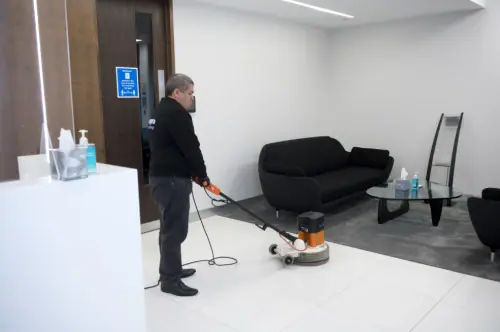
Routine dry mopping is insufficient during wet weather. Facilities teams should deploy mechanical rotary scrubbers paired with certified pH-neutral, high-traction detergents. Auto-scrubbers apply clean water and detergent while simultaneously extracting slurry in a single pass, leaving floors instantly clean, dry, and safe for foot traffic.
3. Applying Certified Anti-Slip Surface Treatments
For high-risk areas like tiled entrance halls and polished concourses, applying specialist anti-slip floor treatments improves micro-roughness without compromising visual shine. These treatments enhance wet-surface friction ratings to meet UK Slip Resistance Group (UKSRG) standards.
4. Deploying Effective Warning Signage and Rapid Response
When sudden downpours occur, wet floor warning signs should be positioned at key entrance points. However, signage is an addition to—not a replacement for—active moisture extraction. Mobile response teams equipped with wet vacuums should clear standing water immediately.
Winter Hard Floor Safety Checklist for Facilities Managers
Use this quick operational checklist during winter weather checks:
- Matting Capacity: Are entrance mats clear of saturated mud and absorbing water effectively?
- Scrubber Dryers: Are mechanical scrubber dryer squeegees inspected and functioning to leave floors completely dry?
- Detergent Selection: Are cleaning teams using non-filming, neutral floor cleaners that do not leave slick residues?
- Salt Neutralisation: Are neutralising wash solutions being applied to break down white road-salt rings?
- Audit Documentation: Are daily floor cleaning rotas and slip risk audits logged digitally for liability protection?
The Integra Cleaning Group Standard
At Integra Cleaning Group, we help facilities managers maintain safe, audit-ready commercial premises throughout the winter. Our floor care teams utilise advanced mechanical scrubbers, eco-labelled anti-slip agents, and rapid low-moisture extraction technology. Backed by ISO 9001 quality standards, we guarantee a five-minute response to all management enquiries from our Rainham headquarters (RM13 9XX), serving commercial estates across London, Essex, and Kent.
Frequently Asked Questions
1. What is the minimum recommended length for commercial entrance matting in winter?
The HSE recommends between 6 and 9 metres of effective barrier matting at high-traffic commercial entrances to allow sufficient footfalls to strip water and grit from shoes.
2. How do alkaline road-salt residues affect commercial floor safety?
Dried road salt leaves a smooth, chalky film that reduces floor friction and damages protective seals. Using neutralising floor washes dissolves salt deposits safely without dulling the floor.
3. Can mechanical floor scrubbing be conducted during normal business hours?
Yes. Industrial auto-scrubbers feature heavy-duty squeegees and high-power vacuum extraction that dry the floor immediately behind the machine, allowing safe access without site closure.
Protect Your Facility Against Winter Slip Risks
Ensure your commercial property remains safe, compliant, and pristine throughout the wet season. Contact Integra Cleaning Group today to arrange a free site audit and receive a tailored floor safety proposal.